 Reviews


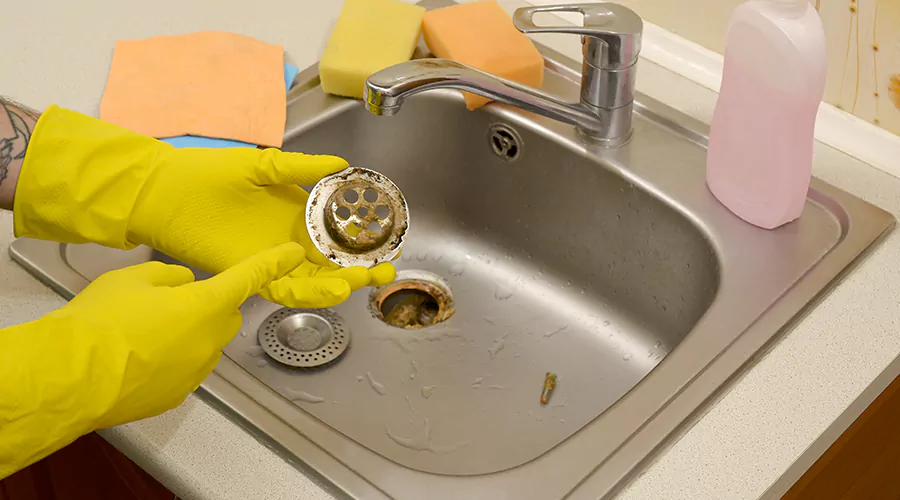
A kitchen sink drain should be cleaned before slow drainage develops because grease and food residue can build inside the strainer and upper drain. Professional drain cleaning costs $147 to $352 in 2026, while routine home cleaning needs only basic supplies. Kitchen plumbing can also address recurring drainage issues, clogged pipes, and other water-flow problems affecting the kitchen sink.
The supplied keyword cleaning kitchen sink drain has 5,000 average monthly searches.
Cleaning is preventive maintenance.
It is different from clearing a sink that is already fully blocked.
How Often Should You Clean a Kitchen Sink Drain?
A light weekly cleaning helps remove residue near the drain opening before it develops into a larger buildup. A deeper inspection can be done when drainage slows or odor begins.
- Clean the strainer frequently.
- Wipe the drain opening during normal sink cleaning.
- Perform a deeper clean when odor develops.
- Inspect the P-trap only when symptoms suggest buildup farther down.
A 2026 cleaning guide recommends weekly drain maintenance to reduce odor and clog formation.
Frequency should increase when the sink handles large amounts of food residue.
The stronger approach is keeping material out of the drain in the first place.
What Builds Up Inside a Kitchen Sink Drain?
Kitchen drains collect different material from bathroom drains. Cooking oil and food residue are the main concerns. Coffee grounds can become trapped inside grease. Small starch particles can also collect around an existing restriction.
- Grease can coat the pipe.
- Food attaches to that coating.
- The sink strainer can hold organic debris.
- The garbage disposal can trap material.
- The P-trap can collect solids.
A clean-looking sink surface does not prove the drainage system is clean.
The material causing odor often sits below the visible drain opening.
How Does Drain Buildup Progress?
Drain buildup develops gradually. The earliest stage can create odor without affecting flow. A thicker layer begins slowing the sink. Severe accumulation eventually becomes a blockage.
| Stage | What You Notice | Maintenance Need | 2026 Cost Exposure |
|---|---|---|---|
| Clean | Normal drainage | Routine cleaning | Minimal |
| Residue | Mild odor | Surface cleaning | Low DIY cost |
| Buildup | Slow water | Deeper cleaning | Often DIY |
| Blockage | Standing water | Mechanical clearing | $147 to $352 |
Professional drain cleaning averages about $246 in 2026.
Routine cleaning is much cheaper than waiting for a full obstruction.
What Are the Signs Your Drain Needs Cleaning?
A kitchen drain can need cleaning before it becomes clogged. Odor is often the earliest clue. A visible greasy film around the drain opening also shows that residue is being left behind.
- The drain smells after dishwashing.
- The strainer feels greasy.
- Water drains slightly slower.
- Food collects under the strainer.
- The disposal develops odor.
- The drain gurgles occasionally.
- A dark film forms near the opening.
- The sink needs frequent rinsing to stay fresh.
- Water leaves residue around the drain.
- The P-trap has not been inspected after recurring clogs.
These signs support preventive cleaning rather than emergency unclogging.
How Do You Clean the Sink Strainer?
The strainer is the first barrier against food entering the drain. Cleaning it regularly removes material before it reaches the P-trap.
- Remove the strainer.
- Discard food into the trash.
- Wash the strainer with dish soap.
- Use a small brush around openings.
- Rinse it.
- Clean the drain rim.
- Dry visible surfaces.
Do not push food from the strainer into the drain.
The supplied keyword clean kitchen sink drain describes this routine maintenance intent.
A clean strainer is also easier to inspect for damage.
How Do You Clean the Upper Drain?
The upper drain can collect grease around its walls even when water still moves normally.
- Remove the strainer.
- Use a narrow non-scratching brush.
- Apply dish soap.
- Scrub reachable surfaces.
- Rinse with hot tap water.
- Repeat if grease remains.
Hot water with dish soap can help move light grease buildup before it becomes a heavier obstruction.
Avoid assuming hot water alone will remove a thick clog.
Preventive cleaning works because the residue is still light.
Should You Use Baking Soda and Vinegar?
Some current cleaning guidance recommends baking soda and vinegar for routine drain maintenance. The mixture can help loosen light residue near the drain. It should not be treated as a substitute for mechanical removal of a dense grease or food clog.
- Remove visible food first.
- Add baking soda according to your cleaning method.
- Follow with vinegar.
- Allow the reaction to settle.
- Rinse afterward.
- Never combine this approach with commercial drain chemicals.
- Do not add bleach to another cleaner.
A maintenance method should not create a chemical hazard.
How Do You Clean a Garbage Disposal?
A disposal requires power to be off before manual cleaning near the grinding chamber.
- Turn off electrical power.
- Clean the removable splash guard when the model allows it.
- Remove visible residue with a suitable brush.
- Do not place your hand in the chamber.
- Restore power after all tools are removed.
- Run water during normal disposal operation.
The supplied keyword clean garbage disposal belongs to this specific appliance-maintenance step.
Cleaning the disposal can reduce odor.
It will not clear a blockage farther into the kitchen drain.
Should You Clean the P-Trap?
The P-trap does not need to be removed every week. It should be inspected when odor or slow drainage continues after the upper drain has been cleaned.
- Place a bucket underneath.
- Loosen the slip nuts.
- Remove the trap carefully.
- Empty the contents.
- Clean the inside.
- Inspect the washers.
- Reassemble the trap.
- Run water.
- Check for leaks.
The supplied keyword sink drain pipe applies to this accessible section beneath the sink.
Do not overtighten plastic connections after cleaning.
How Can You Test Drain Cleanliness?
A clean kitchen drain should accept sustained faucet flow without pooling or strong odor.
- Run hot tap water.
- Watch the drainage speed.
- Fill the basin partway.
- Release the stopper.
- The water should leave quickly.
- Check the second bowl if the sink has two.
- Listen for unusual gurgling.
- Smell the drain after the water stops.
A slow basin release suggests that cleaning has moved into clog-removal territory.
That requires mechanical clearing rather than more surface washing.
When Should You Call a Professional?
Professional drain cleaning becomes appropriate when routine cleaning does not restore flow or several fixtures begin slowing. A maintenance problem has become a blockage when standing water remains after normal use.
Professional drain cleaning costs $147 to $352 in 2026. Most clogs cost about $150 to $350 when professional clearing is needed.
Professional help makes sense when:
- Standing water remains.
- Several drains slow down.
- Odor persists after physical cleaning.
- A hand auger cannot clear the line.
- The drain repeatedly blocks.
- Wastewater returns through the sink.
The larger concern is not dirt around the opening.
It is buildup beyond household-tool reach.
How Can You Keep the Kitchen Drain Cleaner?
The easiest drain to clean is the drain that receives very little food or grease.
- Use a basket strainer.
- Scrape plates before washing.
- Keep cooking oil out of the sink.
- Clean the disposal routinely.
- Rinse the upper drain after greasy dishwashing.
- Respond when odor begins.
Current 2026 guidance specifically recommends avoiding grease and coffee grounds to reduce future clogs.
Preventing buildup costs far less than clearing a blocked drain.
Conclusion
To clean a kitchen sink drain, start with the strainer and upper drain rather than waiting for water to stop moving. Remove food and greasy residue physically. Clean the disposal safely when one is installed. Inspect the P-trap only when odor or slow flow continues. If standing water develops despite routine cleaning, the problem has become a clog. This week, clean the strainer and remove grease from the visible drain opening.
Frequently Asked Questions
How often should I clean my kitchen sink drain?
Light weekly maintenance can reduce odor and buildup. Deeper cleaning is useful when drainage begins slowing.
Can baking soda remove a heavy kitchen clog?
It can help with light residue. A dense grease or food blockage usually needs mechanical removal.
Should I pour grease down the drain with hot water?
No. Grease can cool farther inside the plumbing and contribute to buildup.
Why does my drain smell after cleaning the sink?
Residue can remain inside the P-trap or disposal even when the basin itself is clean.
Does drain cleaning prevent every clog?
No. It reduces buildup but inappropriate food waste can still create blockages.